

Friday May 8, 2026 4:50 pm
Friday May 8, 2026 4:50 pm
ECONOMYNEXT – A former CEO of state-owned Sri Lankan Airlines, who is the key accused in a corrupt Airbus deal, was found dead in the early hours on Friday (08) in Colombo, police said, days after he was granted bail.
Kapila Chandrasena, the ex-CEO of the loss-making SriLankan under former President Mahinda Rajapaksa was arrested on March 12 for allegedly accepting bribes while serving as the CEO of Sri Lankan Airlines and the head of the Procurement Committee for the purchase of Airbus aircraft.
He was granted bail on Tuesday (05) after being questioned for 54 days. His death occurred a day after the Colombo Magistrate Court issued an arrest warrant against Chandresena for violating bail conditions.
In March, he was arrested for the second time in the last seven years over a 2013 corrupt Airbus deal, which a British court found involved the French aircraft manufacturer paid US$2 million to a shell company set up in Brunei under his wife’s name.
Airbus deal is one of the controversial corrupt deals that took place under former President Mahinda Rajapaksa’s administration, and extensive investigations have been carried out following the British Court revelations.
The death also occurred when the island nation’s anti-graft body, the Commission to Investigate Allegations of Bribery or Corruption (CIABOC), summoned former President Mahinda Rajapaksa and his then Aviation Minister to record statements on May 12 regarding the Airbus deal.
Local media reported in March that during the investigation, Chandrasena had revealed he handed over Rs. 60 million from the US$2 million to Rajapaksa and another Rs. 20 million for then-Aviation Minister.
“Forced to Hang”?
However, later in an affidavit seen by EconomyNext, he said a top CIABOC official requested him to take the opportunity to reveal the two politicians behind the Airbus deal.
In the affidavit, Chandrasena also said a top CIABOC official threatened him that he “will be forced to hang” if he did not use the opportunity.
The CIABOC said in March that Chandrasena conspired with his wife and others to set up a shell company in Brunei Darussalam in his wife’s name, opened a bank account in Singapore under that company’s name, and received a sum of EUR 1,454,645.54 as bribe money from the European Aeronautic Defense and Space Company.
It said Chandrasena transferred the bribe money to his own account at the Commonwealth Bank of Australia and to several other individuals, including the then Director General of Sri Lankan Airlines.
Chandrasena and his wife, Priyanka Wijenaike, were first remanded in February 2020 after the British court found that Airbus had paid $2 million to Biz Solutions Inc., a shell company set up in Brunei in 2012.
Investigators revealed the money was transferred to the company’s Singapore account.
Chandrasena served as the CEO of SriLankan from July 2011 to February 2015, during former President Rajapaksa’s second term.
British court documents in 2020 revealed that his wife acted as an agent for the procurement of Airbus aircraft, and Airbus offered a bribe of $16 million.
Namal Questioned
In March last year, the Criminal Investigation Department (CID) of Sri Lanka Police questioned former President Mahinda Rajapaksa’s legislator son, Namal Rajapaksa, over receiving commission from the Airbus deal when his father was in power.
Junior Rajapaksa was questioned for over four hours based on a statement given by a state witness who had been questioned for his reported involvement in the money laundering.
The witness, a well-known close ally of Rajapaksa and a businessman, said that he facilitated the transfer of cash from the Airbus deal and handed it over to Namal Rajapaksa.
Namal Rajapaksa has denied the allegations and said the new government is attempting to attribute all unexplained wealth cases against the Rajapaksas.
International and local investigations have clearly pointed towards the involvement of bribes and misappropriations in the 2013 Airbus deal.
Chandrasena’s 2020 arrest order followed revelations in documents filed in a UK court about payments made to his wife’s company by Airbus in a 2013 sales contract.
He and his wife were later granted bail with their passports impounded.
Airbus agreed to pay around 3.5 billion euros in fines to the Governments of France, the UK, and the US in a settlement following a joint investigation for alleged bribery in sales.
The Sri Lankan Government under Rajapaksa’s successor, Maithripala Sirisena, investigated the deal, but nobody was held accountable until his tenure ended in 2019.
Until the British court found evidence of bribery and misappropriation, Sri Lankan authorities could not arrest anyone in connection with the deal.
The protracted delay in investigating the SriLankan Airlines-Airbus corruption scandal, despite substantial evidence of misconduct, underscores challenges within Sri Lanka’s legal and political systems.
Under President Anura Kumara Dissanayake’s administration, the authorities pushed for a fresh probe into the Airbus deal.
Systemic Corruption
The Airbus deal probe involving alleged bribery and financial irregularities in aircraft procurement highlights systemic issues that impede justice and accountability in Sri Lanka.
Taxpayers continue to suffer due to the Airbus deal. The Government has been funding the loss-making airline because of past debts, including payments for the overpriced Airbus aircraft.
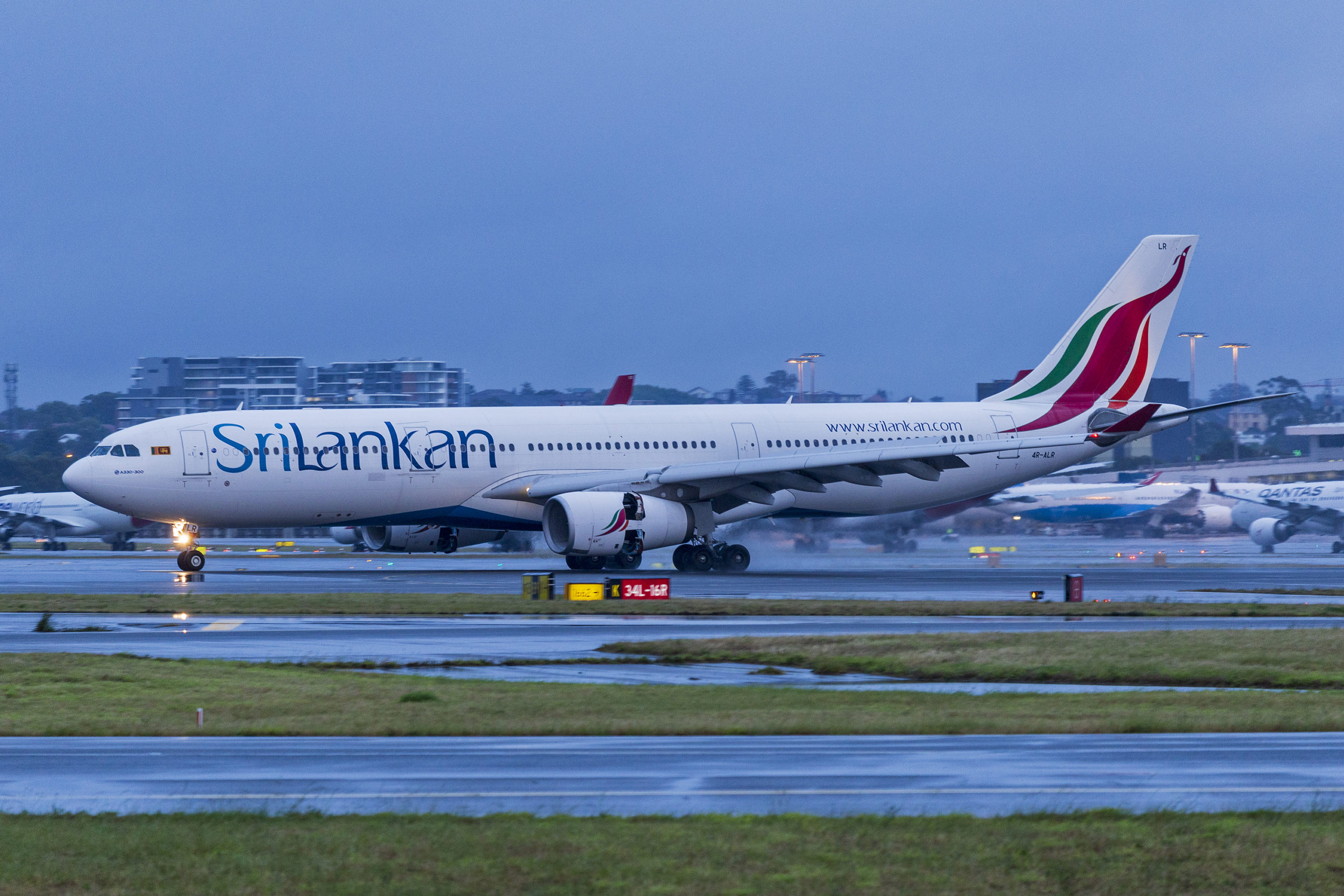
In 2013, SriLankan Airlines entered into agreements to purchase six Airbus A330-300 and four A350-900 aircraft, alongside leasing an additional four A350-900s.
Subsequent investigations revealed that Airbus engaged in corrupt practices to secure these contracts.
Airbus allegedly offered up to $16.84 million in bribes to a company registered in Brunei, which was owned by Priyanka Niyomali Wijenaike, the wife of then-CEO of SriLankan Airlines, Chandrasena.
Of this amount, $2 million was transferred to the company’s account in Singapore in December 2013.
The scandal came to international attention in January 2020 when Airbus settled corruption probes with authorities in the United States, United Kingdom, and France, agreeing to pay the fines.
This settlement included admissions of bribery by Airbus in several countries, including Sri Lanka.
In response, Sri Lankan authorities initiated investigations, leading to the arrest of Chandrasena and his wife in February 2020 on charges of money laundering related to the Airbus deal.
Despite these arrests, progress in the legal proceedings had been minimal.
After their initial detention, both Chandrasena and his wife were released on bail in March 2020. Until his arrest in March this year, there was a conspicuous absence of substantive developments in the case.
The stagnation has raised critical questions about the efficacy of Sri Lanka’s judicial processes and the potential influence of political and institutional factors in high-profile corruption cases.
Sri Lanka’s political landscape is often characterized by intricate networks of patronage and influence.
Individuals implicated in high-level corruption cases frequently have connections to powerful political figures, which can lead to interference in legal proceedings.
Such interference may manifest as pressure on investigative bodies, manipulation of legal processes, or deliberate stalling of cases to protect affiliates.
Chandrasena’s death on Friday has raised many questions about the corrupt deal amid the current government’s aims to proceed with the stalled cases.
When the British court documents revealed his involvement, then-President Gotabaya Rajapaksa ordered a full inquiry into allegations that a former SriLankan Airlines executive’s wife received the $2 million payment.
However, there was no progress due to the Covid-19 pandemic and the subsequent economic crisis.
The U.S. State Department had imposed travel sanctions on Chandrasena and his family over the Airbus deal.
In March 2021, SriLankan Airlines sued Airbus for $1 billion in damages, loss of reputation, reimbursement of costs, and interest.
The national carrier also demanded the cancellation of the A350-900 Purchase Agreement for four A350-900 aircraft, seeking the return of the $19 million advance payment made for those aircraft.
However, progress on this legal case remains undisclosed, even under the new government. (Colombo/May 08/2026)
Continue Reading




Leave a Reply