

ROGUE BANKS : Rogue note-issue banks that over-issued money and did not provide convertibility (did not defend the peg and debased), went bankrupt and could not create more trouble in the days of Adam Smith. But now they repeat the same errors two or three years later using IMF-backed operating frameworks to ‘reflate’ and decimate and stability (Go-cycle).
Thursday April 30, 2026 6:06 pm
Thursday April 30, 2026 6:06 pm
ECONOMYNEXT- Sri Lanka’s rupee closed at 319.75/320.00 to the US dollar in the spot next market, after trades at 319.50/320, market participants said, shortly after macro-economists celebrated the return of inflation to the central bank’s target.
There intervention was around 319.50 to the US dollar.
On April 30 inflation reached the mid-point of the central bank’s target of 5 percent. The agency can create more inflation and depreciate the rupee even more, before any corrective action is taken.
Earlier this week the central bank started repo operations mopping up some of the excess liquidity it had built up from buy-sell swaps and dollar purchases.
To debase the rupee the agency allowed excess liquidity of almost 400 billion to remain in the system, almost twice the level before the economic crisis.
RELATED : Sri Lanka’s exchange rate depreciation by ‘Political Ravishment’
The fall of the rupee and forex shortages in 2015 and 2018, and eventual default without war from external trouble was accomplished with inflation below 5 percent, analysts have pointed out.
In the current cycle, the rupee was systematically weakened from from 297.50 levels to 310 with money printed through buy-sell swaps and aggressive purchasing of dollars to signal exporters to sell at increasingly depreciated prices throughout 2025, as private credit recovered, (explicit exchange rate policy) while spreading a narrative that the rupee was ‘market determined’, critics have pointed out.
In 2026 the rupee depreciated from 310 to 320 to the US dollar despite a Ditwah credit slowdown ruthlessly over purchasing dollars in February to prevent an appreciation and restoration of confidence in the currency.
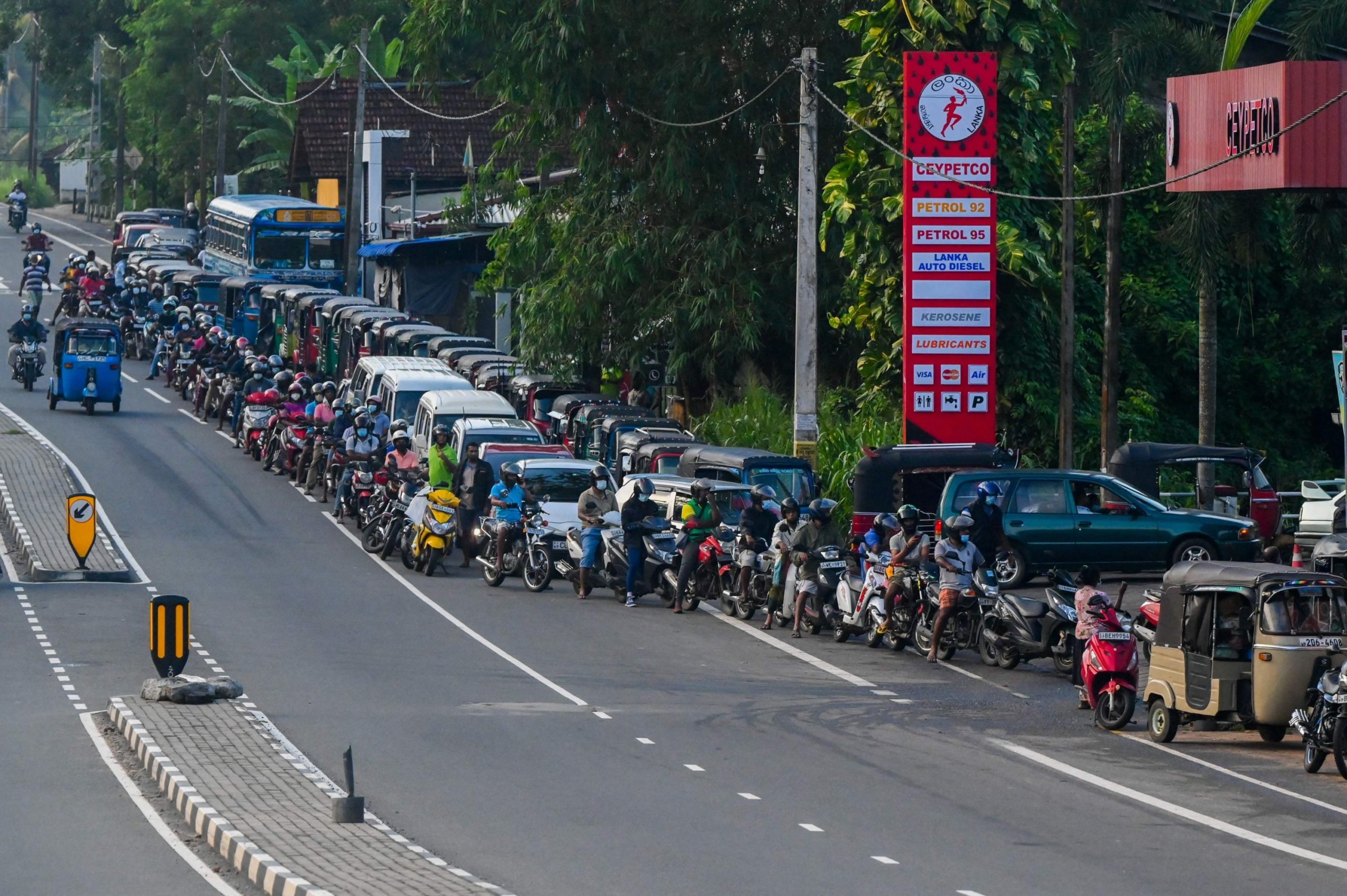
The monetary depreciation has amplified the cost of fuel and imports, with oil prices rising due to the Middle East war.
The debasement of the rupee also pushes up the price of imported and exported foods.
In Sri Lanka however some Indian foods have not yet picked up as the Reserve Bank of India is depreciating the Indian rupees faster than Sri Lanka.
Commercial Banks are selling dollars for telegraphic transfers at 323 rupees.
The Cost of Monetary Depreciation
Building materials prices have also shot up and some builders have halted construction, hoping prices will fall and the rupee will appreciate.
The depreciation which feeds into not only traded goods (imports and exports) but services and housing costs over time, destroying wages and also employee provident fund balances.
“A stable value for money is a key fundamental for a healthy and growing economy,” Prime Minister Goh Chok Tong said at the 25th anniversary of the Monetary Authority of Singapore which has rejected inflationary policy and does not go to the IMF after creating external crises.
“For businessmen, unstable prices create uncertainty, hamper business planning, and inhibit long-term investment.
“For our workers, high inflation erodes the purchasing power of their salaries, eats into their Central Provident Fund (CPF) balances, and discourages savings,”
“Fortunately for Singapore, our inflation rate has been low and our currency strong.
“Low inflation has preserved the real value of our CPF savings and protected our purchasing power.”
“In 1971, it took three Singapore dollars to buy one US dollar. Today it takes one dollar 40 cents to exchange for one dollar.”
The central bank started to create high inflation from the early 1980s, with the IMF’s Second Amendment to its articles, after being restrained to US levels including during the 1970s Great Inflation period, due to a legal requirement to maintain an external anchor, triggering social and political unrest.
Now IMF-prone central banks that reject classical economic theory, escape accountability for rate cuts ‘exchange rate as the first line of defense’ doctrine, while running a deeply flawed operating framework involving inflation targeting without a floating rate, critics have pointed out.
In the case of Sri Lanka, analysts have pointed out that it was not fair for the central bank to destroy the rupee, through spurious monetary doctrines that reject economic theory (Hume, Ricardo and Smith among others), and wages of workers and the EPF along with it.
After destroying wages and the EPF balances of workers from the early 1980s and then paying its employees high salaries and inflation protected defined benefit pensions represented a serious escape of accountability, critics have said.
RELATED : Rejoicing as inflation target, depreciation batter Sri Lanka’s poor, is immoral and is in bad taste
Sri Lanka’s central bank engages in inflationary rate cuts – this time through fx swaps – and behaves like the rogue note issue bank described by Adam’s Smith in the Wealth of Nations, analysts say.
At the time Scotland had free banking and only the bank which printed money and fired excess credit failed and the prudent banks that avoided inflationary policy and those that reduced credit and redeemed its excess note issue through the return of reserves (defending the peg) in time survived.
However after the setting up of the IMF, central banks with bad operating frameworks are bailed out and the entire country goes into crisis, as the same policy errors involving flexible policy and monetary debasement is repeated, critics have said.
In earlier periods of external trouble the central bank has escaped accountability by pointing to current account deficits (a result of net foreign borrowings and printed money turning to imports), and budget deficits. However last year the external current account was in surplus and budget deficits collapsed.
When the current excess liquidity turns into imports, and new swap liquidity from banks and finance companies turn into imports, the external current account can narrow and turn into a deficit. Vehicles are also mostly credit financed.
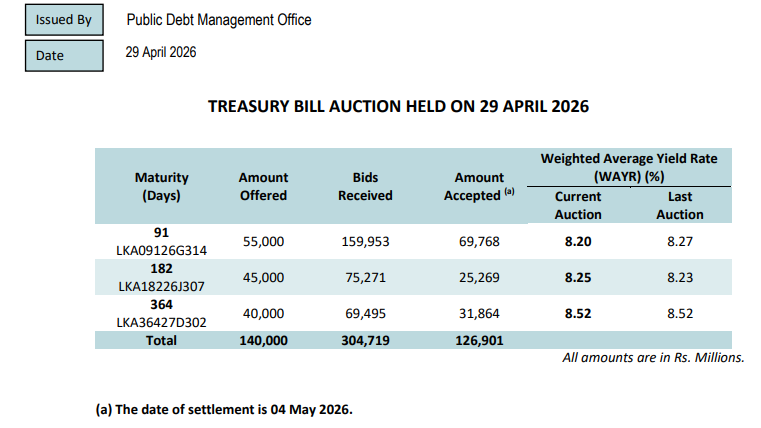
Meanwhile bond yields were broadly steady across the majority of the yield curve.
A bond maturing on 15.12.2026 closed at 8.60/75 percent.
A bond maturing on 15.12.2028 closed down at 9.75/83 percent.
A bond maturing on 15.10.2029 closed flat at 9.95/10.00 percent.
A bond maturing on 01.07.2030 closed at 10.17/20 percent, up from 10.15/20 percent.
A bond maturing on 01.11.2033 closed at 10.95/11.00 percent. (Colombo/Apr30/2026)
Continue Reading









Leave a Reply